

How to Choose Between Hydraulic and Manual HDPE Butt Fusion Welding Machines
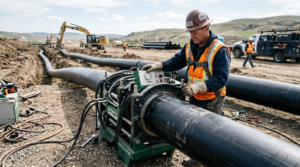
High-Density Polyethylene (HDPE) pipelines have become the preferred choice across municipal water networks, industrial fluid transport, mining, and agricultural irrigation due to their flexibility, corrosion resistance, and leak-free jointing. However, a pipeline system is only as reliable as its joints—and achieving strong, homogenous joints requires choosing the right jointing equipment.
When selecting an HDPE butt fusion welding machine, project managers and site engineers frequently encounter a core question: Should you invest in a Hydraulic or a Manual HDPE Butt Fusion Welding Machine?
In this post, Marwal Piping Systems breaks down how both machine types work, key technical differences, and how to choose the right equipment for your project requirements.
What is Butt Fusion Welding?
Butt fusion is a thermal process used to join thermoplastic pipes such as HDPE and PP. The process involves simultaneously heating the facing ends of two pipes using a controlled heating plate until a molten layer is formed. The heater plate is removed, and the molten ends are pressed together under controlled pressure to form a seamless, monolithic joint that is as strong as the pipe itself.
To apply this joining force, welding machines utilize either manual mechanical leverage or a hydraulic cylinder system.
1. Manual HDPE Butt Fusion Welding Machines
Manual butt fusion machines rely on physical force (applied via handwheels, levers, or mechanical gears) to hold, face, and bring the pipe ends together during the heating and cooling cycles.
Key Features & Advantages:
- Compact & Lightweight: Easy to transport across rugged site terrain without heavy equipment.
- Cost-Effective: Lower upfront investment, making them ideal for small-scale projects or startup contractors.
- No External Hydraulic Power Required: Minimal maintenance requirements since there are no hydraulic fluids, seals, or pumps to maintain.
- Simple Operation: Quick setup times for low-diameter piping jobs.
Best Suited For:
- Pipe Diameters: Smaller sizes, typically ranging from 50mm up to 160mm or 200mm.
- Applications: Small agricultural irrigation, minor repair works, domestic plumbing, and low-pressure utility lines.
2. Hydraulic HDPE Butt Fusion Welding Machines
Hydraulic butt fusion machines feature an electrically driven hydraulic power unit (HPU) connected to hydraulic cylinders on the main frame. This setup allows operators to control and maintain exact drag and interface pressures required by international welding standards (such as ISO 21307 or DSI standards).
Key Features & Advantages:
- Precise Pressure Control: Built-in pressure gauges and control valves ensure exact clamping and joining force throughout the welding cycle.
- Handles Large Diameters: Easily handles thick-walled, heavy-gauge HDPE pipes where manual force is insufficient.
- Consistent Quality: Reduces human error, ensuring repeatable weld beads and reliable joint strength across long pipeline runs.
- Durable Construction: Heavy-duty clamps and robust hydraulic frames withstand demanding industrial field conditions.
Best Suited For:
- Pipe Diameters: Mid to large sizes, typically 160mm up to 630mm, 1000mm, or larger.
- Applications: Municipal water mains, gas supply lines, industrial chemical transport, cross-country pipelines, and high-pressure infrastructure.
Head-to-Head Comparison: Hydraulic vs. Manual
| Feature / Criteria | Manual Butt Fusion Machine | Hydraulic Butt Fusion Machine |
|---|---|---|
| Primary Pressure Source | Handwheel / Mechanical Lever | Hydraulic Cylinder & Power Unit |
| Typical Pipe Range | 50mm – 160mm / 200mm | 160mm – 1200mm+ |
| Pressure Accuracy | Manual estimation | Gauge-monitored & precise |
| Portability | High (easy manual transport) | Moderate to Low (requires site transport) |
| Labor Intensity | Higher physical effort per joint | Low physical effort (assisted power) |
| Ideal Project Type | Low-pressure & small irrigation | High-pressure, critical infrastructure |
Key Factors to Consider When Making Your Choice
To select the right butt fusion machine for your business or project, consider the following parameters:
- Pipe Diameter & Wall Thickness (SDR Rating):
- For pipes below 160mm, a manual machine is often sufficient.
- For pipes 160mm and above, hydraulic pressure is necessary to overcome pipe stiffness and achieve full surface fusion.
- Project Pressure Standards & Quality Compliance:
- If your project requires documented weld charts, strict pressure logging, or compliance with municipal standards, a hydraulic machine provides the required control and precision.
- Job Site Mobility:
- For remote sites without power generators or in tight trench environments, lightweight manual machines offer quick deployment.
- Long-Term ROI:
- If you plan to expand into larger municipal or industrial contracting, investing in a hydraulic machine provides greater versatility for various pipe schedules.


Get Expert Guidance from Marwal Piping Systems
Selecting the proper jointing equipment ensures long-lasting pipeline integrity and prevents costly site failures. At Marwal Piping Systems Pvt. Ltd., we manufacture and supply a comprehensive range of high-performance HDPE Butt Fusion Welding Machines (Manual & Hydraulic), Electrofusion Units, and PP Compression Fittings.
- Need technical advice or a quote for your next project? Contact our engineering team today to find the right equipment solution tailored to your operational needs!